
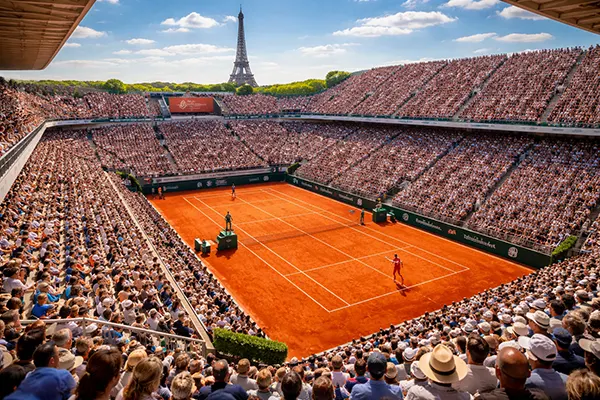
Roland-Garros 2026: Key Tournament News, Favourites and Early Storylines
The 2026 edition of Roland-Garros arrives with a noticeable shift in the men’s and women’s tours. With the gradual transition from the era of long-standing champions to a younger, more physically aggressive generation, the Paris clay courts are once again becoming a testing ground for adaptability, endurance and tactical depth. Early signals from the season suggest a highly competitive draw, where consistency on clay will matter more than reputation alone.
Key Developments Leading into Roland-Garros 2026
The 2026 clay season has already produced several notable patterns. Players who have focused on physical conditioning and point construction are gaining an advantage over those relying on pure power. The slower surface in Paris continues to reward patience, spin variation and defensive recovery, which has influenced how leading contenders prepare during the European spring tournaments.
Another important development is the increased role of data-driven coaching. Many top players now use performance analytics to optimise rally length, serve placement and shot selection on clay. This has led to more structured matches, where tactical discipline often outweighs spontaneous aggression, especially in long best-of-five encounters.
Weather conditions in recent years have also impacted the tournament schedule and match dynamics. Cooler temperatures and heavier balls tend to slow down play, favouring baseline specialists. If similar conditions persist in 2026, it could significantly influence which players progress deep into the draw.
Emerging Tactical Trends on Clay Courts
One of the clearest tactical trends is the renewed importance of topspin-heavy forehands. Players capable of generating high net clearance and deep bounce are forcing opponents into uncomfortable defensive positions. This approach is particularly effective on Court Philippe-Chatrier, where longer rallies are common.
Drop shots have also become more frequent, not as occasional surprises but as integral parts of point construction. With players positioned further behind the baseline, well-timed drop shots can disrupt rhythm and create scoring opportunities without requiring outright winners.
Serve patterns on clay have evolved as well. Rather than relying on aces, players are focusing on setting up the first groundstroke. Wide serves followed by aggressive forehands are now a standard tactic, especially among younger competitors who combine speed with precise court positioning.
Favourites for the 2026 Title
The list of favourites for Roland-Garros 2026 reflects the ongoing generational shift. Several established names remain strong contenders, particularly those with proven success on clay. However, the gap between experienced champions and rising players has narrowed, making early-round matches more unpredictable than in previous years.
Among the men, players with consistent results in Monte Carlo, Madrid and Rome are entering Paris with momentum. Those who demonstrate both physical resilience and mental stability across these tournaments typically perform well at Roland-Garros, where matches often extend beyond three hours.
In the women’s draw, versatility continues to be a defining factor. Players capable of adapting their game to different match situations — switching between defence and controlled aggression — are likely to progress further. Clay rewards those who can maintain focus over long exchanges and manage unforced errors effectively.
Dark Horses and Breakthrough Candidates
Every year, Roland-Garros produces unexpected runs from lower-seeded players, and 2026 is unlikely to be an exception. Younger athletes who have grown up on clay courts often possess a natural understanding of movement and shot selection, giving them an edge against opponents less comfortable on the surface.
Another category of potential breakthrough players includes those returning from injury with limited seeding. These competitors can be particularly dangerous in early rounds, as their ranking does not always reflect their true level of performance.
Qualifiers and wildcard entrants also play a role in shaping the tournament narrative. Having already competed on the Paris clay during qualifying rounds, they enter the main draw with valuable match practice and familiarity with conditions, which can translate into early upsets.
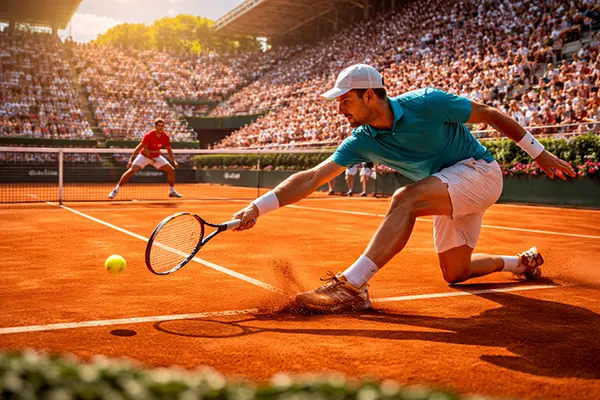
Early Storylines to Watch in Paris
One of the central storylines of Roland-Garros 2026 is the balance between endurance and scheduling. With a dense tennis calendar, players must carefully manage their physical condition to peak at the right moment. Those arriving in Paris without fatigue are likely to have a significant advantage.
Another storyline revolves around coaching changes and new partnerships. Several top players have adjusted their coaching teams in the lead-up to the tournament, aiming to refine their clay-court strategies. These changes can lead to noticeable improvements, particularly in tactical decision-making under pressure.
There is also growing attention on mental resilience. Matches on clay often involve momentum swings, extended rallies and high error margins. Players who can maintain composure during difficult phases are better equipped to handle the demands of the tournament’s later stages.
What Could Define the 2026 Champion
The eventual champion in Paris will likely be defined not by dominance in short bursts, but by sustained performance across two weeks. Recovery between matches, efficient point construction and the ability to adapt to different opponents are critical factors.
Physical endurance remains a cornerstone of success at Roland-Garros. Matches frequently extend to four or five sets in the men’s draw, requiring not only stamina but also smart energy management. Players who avoid unnecessary risks early in matches often preserve strength for decisive moments.
Finally, psychological stability can be decisive. The pressure of competing on one of tennis’s biggest stages, combined with unpredictable match conditions, tests even the most experienced players. Those who remain focused on each point, rather than the broader stakes, are more likely to lift the trophy.