
MotoGP Sprint Races: Why Saturday Results Do Not Always Predict the Grand Prix Winner
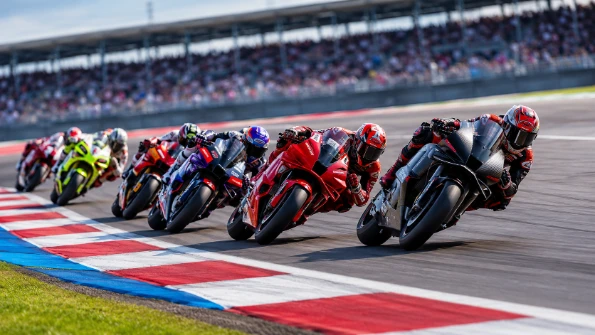
A MotoGP Sprint can look like the clearest possible preview of Sunday’s Grand Prix. The riders use the same circuit, qualifying establishes the starting grid for both races, and the leading contenders are already racing one another rather than simply setting practice laps. Yet treating the Saturday result as a forecast of the Grand Prix is often misleading. The Sprint is approximately half the distance of the main race, rewards a different balance between outright pace and tyre conservation, and takes place under conditions that may change significantly before Sunday. Since Sprint racing became a regular part of MotoGP weekends in 2023, there have been many occasions when Saturday’s strongest rider has not been Sunday’s winner. The 2026 season has continued that pattern: Alex Márquez won the Catalunya Sprint before Fabio Di Giannantonio took the Grand Prix, while Francesco Bagnaia won at Brno on Saturday only for Marc Márquez to lead the Sunday results. Understanding why requires looking beyond the finishing order and considering what each race actually tests.
A Sprint Measures a Different Kind of Performance
The most important distinction is distance. A MotoGP Sprint covers roughly half the laps of the Sunday race and normally lasts around 20 minutes rather than approximately 40 minutes for a full Grand Prix. That changes the demands placed on both rider and motorcycle. A competitor who can produce extremely strong pace immediately after the start may have everything required to win on Saturday even if maintaining that pace across a much longer race would be difficult. Conversely, a rider whose strength lies in maintaining consistent lap times while competitors gradually lose performance may have relatively little time to demonstrate that advantage in a Sprint.
The championship points structure reflects the difference between the two races. A Sprint victory is worth 12 points, with points available to the first nine finishers. A Grand Prix victory pays 25 points and the first 15 riders can score. The maximum available from a weekend is therefore 37 points, but more than two-thirds of that maximum comes from Sunday. This matters because teams cannot simply treat the Sprint as a shorter copy of the Grand Prix. Saturday is important in its own right, yet the longer race still carries greater championship value and presents a different sporting problem. A rider may therefore leave Saturday without a victory while still having a package that is exceptionally well suited to Sunday.
The 2026 Czech Grand Prix at Brno provided a useful example. Francesco Bagnaia made an excellent start from third on the grid in the Sprint and took the lead, eventually winning ahead of Ai Ogura and Marc Márquez. The following day, the order changed. Marc Márquez won the Grand Prix, Ogura finished second and Bagnaia was third. Saturday had correctly identified three of the strongest riders of the weekend, but it had not established their Sunday order. That distinction is important when analysing Sprint results: the shorter race may reveal who has competitive pace, but it does not necessarily reveal who can use that pace most effectively over the full Grand Prix distance.
Shorter Distance Changes Risk, Tyres and Racecraft
A short race naturally gives riders less time to recover from a poor opening lap. Losing several positions at the start of a Sprint can be decisive because there may be only a limited number of laps in which to regain them. This encourages immediate aggression, particularly in the opening corners. Track position becomes extremely valuable, and riders who are strong under braking or confident while attacking a crowded group can gain more from those qualities on Saturday. In the Grand Prix, an imperfect start can still be costly, but the longer distance provides more opportunities to settle into a rhythm, assess rivals and recover positions without trying to solve everything in the first few laps.
Tyre behaviour also becomes more significant as the distance increases. A rider does not need exactly the same tyre characteristics for a half-distance Sprint as for a full Grand Prix. Over the shorter race, it may be possible to exploit available grip more aggressively because the tyre does not need to deliver the same level of performance for twice as many laps. On Sunday, preserving rear grip, controlling temperature and avoiding unnecessary wheelspin can become increasingly important as the race progresses. The fastest rider in the opening phase is therefore not automatically the rider with the strongest package over an entire Grand Prix.
This is one reason lap times need context. A Sprint winner who controls the race from the front may look almost unbeatable, but the result does not show what would have happened after another ten or twelve laps of tyre wear. At the same time, a rider finishing fourth or fifth could be more competitive than the position suggests if their motorcycle normally performs well once grip begins to fall. The most useful Saturday analysis therefore considers how the pace was produced. Consistency, tyre condition near the finish, the ability to follow another bike and the rider’s pace in clear air can all be more informative for Sunday than the simple question of who crossed the line first.
Sunday Creates a New Race, Not a Replay
One detail that is easy to overlook is that the Sprint finishing order does not set the grid for the Grand Prix. Qualifying establishes the starting positions for both races. A rider who finishes well down the order on Saturday because of a mistake, contact or mechanical issue can therefore return to the same strong grid position on Sunday. Likewise, winning the Sprint gives no additional starting advantage for the Grand Prix. The riders effectively return to the qualifying result and begin again, which prevents Saturday’s race from creating the sort of direct progression that would exist if the Sprint itself determined Sunday’s grid.
This makes individual incidents especially important when interpreting results. A Sprint classification records what happened, but it does not always show the underlying competitive order. A rider might lose several seconds while avoiding another rider’s accident, run wide during a battle or make one error that would have less serious consequences over a longer race. Another competitor can benefit from the incident and inherit a podium or victory without necessarily having the best long-distance pace. The result remains completely valid, but its value as a prediction depends on understanding how it was achieved.
The 2025 Catalan Grand Prix offered a particularly clear illustration. Alex Márquez had been leading the Sprint by more than a second before crashing with four laps remaining, allowing Marc Márquez to take the Saturday victory. Alex returned on Sunday and won the Grand Prix, with Marc second. The Sprint result alone suggested that Marc had been the weekend’s winner so far, but the race itself had shown that Alex possessed extremely competitive pace before his mistake. Anyone analysing the event only through the final Saturday classification would have missed one of the strongest clues about what might happen in the Grand Prix.
Weather, Starts and Incidents Can Rewrite the Order
MotoGP motorcycles are sensitive to relatively small changes in track and weather conditions. A warmer or cooler surface can alter available grip, tyre behaviour and the confidence a rider has when braking or accelerating. Wind direction and strength can influence braking stability and make certain corners more difficult. Even when Saturday and Sunday remain dry, a change in temperature can favour a different motorcycle or riding style. If rain arrives, the comparison can become far less useful because wet-weather performance introduces an entirely different set of strengths and weaknesses.
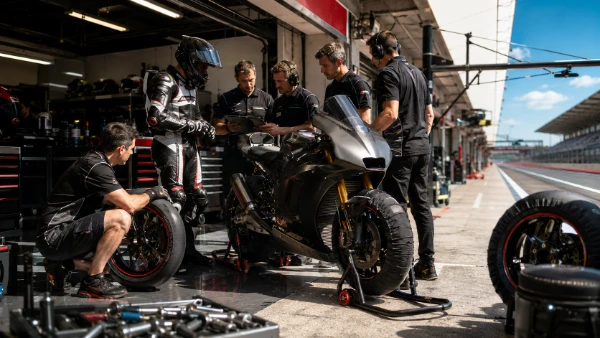
Track conditions can change as well. Rubber laid down during other races and sessions may improve grip in some circumstances, while overnight rain can remove part of that rubber and effectively reset the surface. Riders and engineers also gain another substantial set of race data from the Sprint. They can examine where time was lost, how the tyres behaved, which rivals were stronger in particular sections and whether the chosen settings worked when riding in traffic. Saturday is therefore not only a competition; it is also an additional source of information before the more valuable Sunday race.
The 2026 Catalan Grand Prix showed how dramatically circumstances can separate the two results. Alex Márquez won Saturday’s Sprint by only 0.041 seconds over Pedro Acosta, the closest Sprint finish recorded at that point. On Sunday, however, the Grand Prix was disrupted by major incidents and red flags. Alex Márquez was involved in a crash, while Fabio Di Giannantonio ultimately emerged as the race winner. Nothing about Alex’s Sprint victory was misleading in itself: he genuinely had the pace to win on Saturday. What changed was the race around him. MotoGP contains enough variables that even a very convincing performance cannot guarantee that the next race will follow the same script.
How to Read Sprint Results Before the Grand Prix
The most useful way to interpret a Sprint is to treat it as evidence rather than a prediction. Finishing position is the obvious starting point, but the gaps between riders can be more revealing. A winner who finishes several seconds clear after controlling the pace has provided stronger evidence of competitive speed than a winner who inherits first place following a rival’s crash. Equally, a rider finishing only a few tenths behind after starting several rows further back may have demonstrated more potential for Sunday than the classification initially suggests. The story of the race matters as much as the final positions.
It is also worth separating qualifying speed from race speed. A rider starting from pole may be exceptionally effective over one lap but struggle to maintain the same advantage once tyres begin to lose performance. Another rider may qualify on the second or third row yet possess stronger pace over repeated laps. Because the same qualifying result determines the grid for both the Sprint and Grand Prix, Saturday provides the first opportunity to see how those strengths interact in a race. It can expose riders who are better in traffic, motorcycles that accelerate particularly well from slow corners and competitors capable of maintaining consistent pace without relying on a perfect qualifying lap.
The strongest Sunday candidates are therefore not always limited to the Sprint podium. A rider who finishes fourth after losing time at the start, fifth after a difficult first lap or even lower after a recoverable mistake may remain a serious Grand Prix contender. Practice data can add further context, particularly longer runs completed before qualifying. If a rider repeatedly produced competitive laps during practice and then encountered an isolated problem in the Sprint, there is little reason to assume that Saturday’s finishing position represents their full potential. By contrast, a rider who depended heavily on early grip or clear air during the Sprint may face a more difficult challenge once the distance increases.
What Saturday Can Tell You — and What It Cannot
A Sprint still provides valuable information. It shows how riders launch from the grid, how motorcycles behave in a group and whether qualifying pace survives under genuine race pressure. It can reveal which riders are confident enough to overtake, which bikes have strong acceleration and which competitors can immediately establish a sustainable rhythm. Because everyone is racing rather than preparing for another session, the Sprint removes much of the uncertainty that surrounds practice times. A rider who performs strongly on Saturday should therefore be taken seriously for Sunday, even when the result is not a guarantee.
What the Sprint cannot fully answer is how the same combination of rider, motorcycle and tyres will behave over approximately twice the distance. It cannot reproduce Sunday’s exact track temperature, weather, first-lap incidents or tyre degradation. It cannot predict a red flag, contact between riders or a technical problem. Nor can a Sprint result account for every adjustment a team may make overnight after studying Saturday’s data. These unknowns are large enough to reverse the order even when the leading riders remain broadly competitive across the whole weekend.
The best reading of a MotoGP Saturday is therefore more nuanced than simply backing the Sprint winner to repeat the result. The Sprint identifies genuine strengths, but those strengths need to be considered alongside race distance, tyre management, starting performance, track conditions and the circumstances behind each finishing position. Catalunya and Brno in 2026 supplied two very different examples of the same principle: Alex Márquez and Francesco Bagnaia were deserved Saturday winners, yet Fabio Di Giannantonio and Marc Márquez respectively took the larger prizes on Sunday. A Sprint is one of the best pieces of evidence available before a Grand Prix, but it remains evidence from a shorter and fundamentally different race.