

Why Britain Wants to Restrict Unlicensed Gambling Sponsorship of Football Clubs
Gambling sponsorship has been part of British football for years, but the debate changed significantly during 2025 and 2026. The UK government is now considering rules that would prevent football clubs and other organisations from accepting sponsorship or advertising from gambling operators that do not hold a Gambling Commission licence. The proposal addresses a particular gap in the existing system: an overseas gambling business can currently sponsor a British club without holding a British licence if its gambling services remain inaccessible to consumers in Great Britain. Ministers argue that this distinction has become increasingly difficult to justify when football gives those brands extensive exposure to British supporters. The issue is therefore broader than logos on shirts. It concerns consumer protection, the position of licensed operators, the effectiveness of geo-blocking, financial checks within football and the ability of regulators to keep unregulated gambling businesses away from British consumers.
Why Unlicensed Gambling Sponsorship Has Become a UK Policy Issue
The current rules are based on an important legal distinction between operating gambling services in Great Britain and advertising a brand whose gambling services are intended for customers elsewhere. Online gambling companies that provide facilities to British consumers generally need the appropriate Gambling Commission licence. However, an overseas operator without that licence may currently have a commercial relationship with a British football club if people in Great Britain cannot use its gambling services. In practice, this usually means that access from British internet addresses must be blocked. This arrangement allowed international gambling brands to use the enormous global audience of English football without necessarily competing for British customers directly.
That distinction has become increasingly controversial because football sponsorship is highly visible inside Great Britain even when the sponsor says its gambling service is intended for overseas markets. A logo can appear on shirts, sleeves, advertising boards, interview backdrops and other club materials seen by supporters throughout a season. The Department for Culture, Media and Sport argues that this exposure can still create brand recognition among British consumers. Someone seeing a sponsor repeatedly during Premier League coverage may later search for the company online, even though the business does not hold a Gambling Commission licence. The government therefore considers physical advertising and sponsorship capable of influencing British consumers even where the associated gambling site uses geographic restrictions.
The scale of the issue also increased its political importance. In its July 2026 consultation, the government estimated that around 40% of Premier League clubs had sponsorship or advertising arrangements with unlicensed gambling operators during the 2025/26 season. That does not mean those clubs were automatically breaking the law: under the rules applying at the time, such arrangements could remain lawful when the relevant gambling services were genuinely inaccessible to consumers in Great Britain. The figure nevertheless demonstrated that unlicensed sponsorship was not an isolated feature involving only one or two clubs. For ministers and regulators, it had become a recurring commercial model within the country’s most visible football competition.
How the TGP Europe Case Exposed the Weakness in the Existing System
A major turning point came with TGP Europe, a Gambling Commission licensee that had provided gambling services for a number of overseas brands through white-label arrangements. Under such an arrangement, a licensed company can operate gambling services in Great Britain while using a brand belonging to another business. This allowed overseas names to maintain a lawful British presence and, in some cases, enter major football sponsorship agreements. TGP Europe had held a Gambling Commission licence since 2014 and became particularly significant because several internationally focused gambling brands associated with British football relied on its licence.
The situation changed in May 2025. Following regulatory action, TGP Europe surrendered its Gambling Commission licence and left the British market. The Gambling Commission had identified shortcomings including insufficient checks on business partners and failures connected with anti-money-laundering requirements. Once that licence disappeared, brands relying on the arrangement no longer had the same licensed route into the British gambling market. Some still had sponsorship relationships with football clubs, creating an awkward situation in which a gambling name could remain highly visible at a British stadium even though the associated operator itself no longer held a Gambling Commission licence.
The case demonstrated why relying only on geographic blocking places considerable responsibility on clubs and regulators. The Gambling Commission has warned sports organisations that, where they work with an unlicensed operator, they need to make sure British consumers cannot access that operator’s gambling facilities. This is not simply a one-time check when a sponsorship contract is signed. Accessibility can change, websites can be replaced and technical restrictions can potentially be bypassed. As a result, clubs may need continuing assurance that the sponsor remains inaccessible from Great Britain. The government’s proposed approach would simplify that position: rather than asking clubs to assess whether an unlicensed sponsor has effectively blocked British customers, the sponsorship itself would be prohibited.
Consumer Protection and Market Integrity Behind the Proposed Restrictions
Consumer protection is one of the government’s principal reasons for seeking change. A gambling company licensed by the Gambling Commission has to follow British regulatory requirements covering areas such as customer protection, safer gambling, complaints, anti-money-laundering controls and the handling of customer funds. An overseas operator without a British licence is not supervised by the Commission in the same way. Even if it is regulated in another country, its obligations may differ significantly from those applying in Great Britain. For consumers, the practical difference can become important when there is a dispute over withdrawals, account restrictions, identity checks or gambling-related harm.
Ministers are particularly concerned that football can give an unlicensed business an appearance of familiarity or legitimacy. Supporters regularly see sponsors alongside established clubs, players and competitions, and many may not distinguish between a Gambling Commission licensee and a company authorised only in another jurisdiction. Sponsorship does not itself certify that a gambling business has been approved by the British regulator, but that distinction is not necessarily obvious to every viewer. The government therefore wants the advertising footprint visible in Great Britain to belong to operators that are subject to British licensing requirements when gambling services are associated with the British market.
The proposal is also intended to protect the regulated market. Gambling companies holding British licences incur costs to comply with Gambling Commission rules and can face regulatory action when they fail to meet them. Ministers argue that it is difficult to maintain a consistent regulatory system if businesses outside that system can obtain comparable visibility through British sport without carrying the same obligations. The question is not whether every overseas operator is unsafe. Rather, the government’s position is that companies receiving prominent gambling exposure within Great Britain should not gain a commercial advantage from remaining outside the domestic licensing framework while licensed businesses must meet extensive regulatory conditions.
Why Geo-Blocking and VPN Access Have Become Part of the Debate
Geo-blocking is central to the present arrangement. An unlicensed gambling operator can restrict visitors identified as being in Great Britain so they cannot register, deposit money or place bets. When those restrictions work correctly, the operator can argue that it is not providing remote gambling facilities to British consumers. This is one reason sponsorship by an overseas operator is not automatically unlawful under the rules applying in 2026. The Gambling Commission nevertheless requires sports organisations involved in these arrangements to take the accessibility of the sponsor’s services seriously and has warned that they may face legal risks if British consumers can actually gamble with an unlicensed business.
The difficulty is that location controls are not absolute. Virtual private networks can make internet traffic appear to originate from another country, while consumers determined to reach an overseas website may look for alternative addresses or related sites. The government’s July 2026 consultation specifically identified the possibility of consumers circumventing geo-blocking with VPNs. This does not mean every person exposed to an overseas sponsor will attempt to bypass restrictions, nor does it make geo-blocking useless. It does mean that ministers no longer consider geographic restrictions alone a sufficient answer to the broader question of whether unlicensed gambling brands should receive widespread exposure through British sport.
Removing the sponsorship route would address the problem earlier in the chain. Instead of attempting to determine whether supporters exposed to a particular brand can subsequently circumvent its restrictions, the proposed rule would prevent an unlicensed operator from obtaining that physical advertising presence in the first place. The government expects this to reduce the visibility of businesses that do not provide British regulatory protections. There is still an important limit to the current proposal: the 2026 consultation concentrates on physical manifestations of sponsorship and advertising rather than creating a comprehensive new rule for every form of online promotion. Ministers have indicated that further measures could be considered separately if evidence shows that they are necessary.
What the Proposed Ban Could Mean for British Football
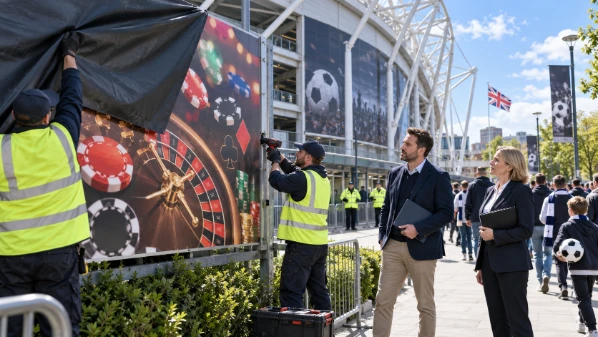
The government’s preferred approach, set out in July 2026, is a ban applying from a fixed date in August 2027, before the 2027/28 football season. Under the proposal, clubs, leagues, events, venues and other relevant parties would no longer be able to advertise or receive sponsorship from a gambling provider that does not hold a Gambling Commission licence when the advertising takes place in Great Britain. The intended scope is broad enough to cover kit and equipment sponsorship, pitch-side advertising, programmes, venue infrastructure and naming arrangements for events, leagues and venues. Continuing a prohibited arrangement after the rules take effect could constitute a criminal offence.
Importantly, this proposal is separate from the Premier League’s existing decision on front-of-shirt gambling sponsorship. Premier League clubs agreed in 2023 to remove gambling companies from the front of matchday shirts after the end of the 2025/26 season. That change applies from the 2026/27 season but does not amount to a complete prohibition on every gambling sponsorship relationship. Gambling advertising can still appear in other permitted positions and commercial arrangements, subject to applicable rules. The government’s 2026 proposal addresses a different question: whether a gambling business without a Gambling Commission licence should be permitted to sponsor or advertise through British sport at all.
For clubs currently relying on overseas gambling sponsorship, the financial implications can be significant. Gambling companies have historically offered competitive sponsorship fees, particularly where Premier League exposure provides access to audiences in Asia and other international markets. Removing unlicensed businesses from this market would reduce the number of eligible sponsors available to some clubs. The government has recognised that commercial contracts cannot always be replaced immediately, which is one reason it proposed a transition period rather than an overnight change. At the same time, ministers argue that commercial income has to be balanced against consumer protection, regulatory consistency and concerns about the movement of potentially illicit money through sport.
Why Financial Crime Concerns Extend the Debate Beyond Advertising
Money laundering has become another significant part of the government’s case. The UK’s 2025 National Risk Assessment of Money Laundering and Terrorist Financing identified football clubs and football agents as vulnerable to financial crime. Football involves substantial international financial flows through ownership, transfers, sponsorship, image rights and commercial contracts. Complex corporate structures can make it difficult to identify the ultimate source or beneficiary of money. This does not mean gambling sponsorship is inherently connected with criminal activity, but sponsorship agreements involving opaque overseas businesses can create additional due-diligence challenges for clubs.
The government has specifically linked its proposed restrictions to the need for stronger safeguards around commercial relationships involving unlicensed gambling businesses. A British-licensed operator is subject to Gambling Commission requirements and can be investigated or sanctioned within the domestic regulatory system. When a sponsor sits outside that system, British authorities have fewer direct regulatory tools available to examine its gambling operations. Ministers therefore see a licence requirement as providing a clearer threshold for sponsorship eligibility, while also reducing reliance on individual clubs to assess complicated foreign ownership structures and regulatory arrangements.
As of September 2026, the wider prohibition remains a proposed change rather than an already-operative blanket ban. The DCMS consultation opened on 15 July and closed on 9 September 2026, with the government due to consider responses before deciding the final form of any legislation. The preferred starting point described in the consultation is August 2027, although an alternative approach would allow certain existing agreements to continue for a limited period. What is already clear is the direction of policy: British authorities increasingly want gambling visibility in domestic football to be associated with businesses that can be held directly accountable under the country’s licensing system. For clubs, this makes the regulatory status and ownership of potential gambling sponsors an increasingly important part of commercial due diligence.